
The Mountain Chooses
On September 2, I wrote here asking you to pray for Avi and Ranjon.
They were two of the three Sherpa guides who had led our group to Everest Base Camp and they were missing. They had been guiding a group to Kailash Mansarovar when all contact with them was lost.
At the time, I wrote:
When I was struggling on that mountain, they held hope for me.
Now, we hold hope for them.
And for two weeks, we did.
We prayed. We waited. We hoped.
Today, I return with words I did not want to write.
Avi and Ranjon are not coming home.
Even though their bodies have not been found, their families have begun last rites.
The Mountain Chose
For the past two weeks, I have been walking with them once more in my mind. Together we journey from Kathmandu to Lukla, from Lukla to Everest Base Camp, and all the way back.
Every single step I took on that journey was a step they also walked with me.
So as I retrace those steps, I keep returning to the words that began my Everest journey: The mountain chooses.
Six weeks before we left for Nepal, my right hip gave way during a training hike. Suddenly, the journey I had prepared for seemed impossible.
I called Dipak, the owner of Nepal Trekking Planner, and told him I might not be going.
He said something I carried all the way to Everest Base Camp and that stayed with me long after. He said, “Come. Let the mountain choose.”
And the mountain did.
It let me come.
And at the start of my climb, in Kathmandu, that’s when I met Avi.
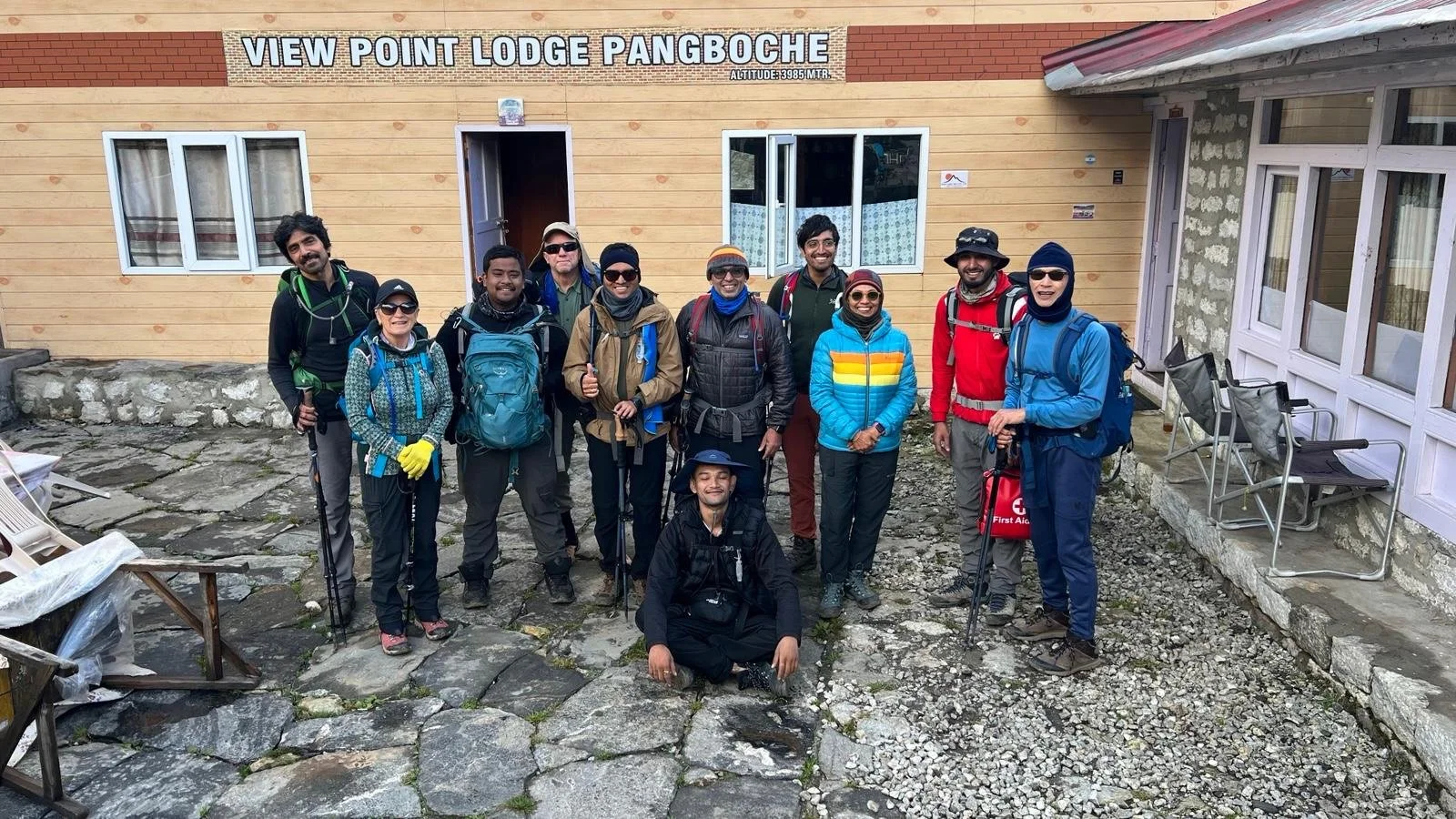
Avi, the Wise One
Avi was our lead Sherpa guide.
Day after day, he walked with me.
I was slow. He asked me to slow down even more.
Vistare, vistare.
Slowly, slowly.
“It is not a race. You don’t have to reach at a certain time.”
On difficult mornings, when the exhaustion and pain of the previous day were still needling me, Avi would remind me to “Leave yesterday on the mountain. Today, we begin again.”
One breath. One step. Then another. One after the other.
I came home and wrote about that lesson. It became one of my five lessons from the mountain: no matter how hard yesterday was, we can begin again.
But there were other things I never wrote about.
They Knew the Mountain Differently
I didn’t write about what happened when we reached the unstable sections of the Khumbu Glacier.
You could hear avalanches in the surrounding mountains. Rocks were falling. The glacier itself is constantly changing.
Before we crossed an unstable section, Avi and the other guides went first. They moved quickly to the other side, checked that the terrain was solid, and only then signaled that it was safe for us to cross.
I once asked why they would risk their lives for us.
“The mountains are home to us.”
There was awe. Respect. Belonging.
Avi talked often about how unstable the area was becoming. He told me that even the location of Everest Base Camp was changing more frequently as the glacier changed.
“Anu ma’am, you are lucky you came now.”
He wondered what this place would look like in ten or twenty years.
The Magic at Tengboche
At Tengboche, we meditated inside the monastery. Prayer wheels, prayer flags and mani stones were everywhere. I remember sitting before the colossal Buddha and wondering how something so enormous had reached a place without roads.
Eventually, I stopped needing an explanation.
There are moments when explanation gives way to wonder. I called it magic.
The next morning, Avi gave us another mountain lesson.
From this point onward, he told us, no matter who was walking beside us, we were walking alone.
I asked him what he meant.
At this altitude, he explained, it becomes a journey of mental strength. It is you and your thoughts. How you respond determines the rest of your journey.
I laughed saying “Dipak says the mountain chooses. You are telling me the choice is mine.”
Avi smiled. “Yes ma’am. Mr. Dipak is right. And I am right.”
I understood the paradox only later.
Dipak was inviting me to surrender where I had no control.
Avi was reminding me to understand where I did.
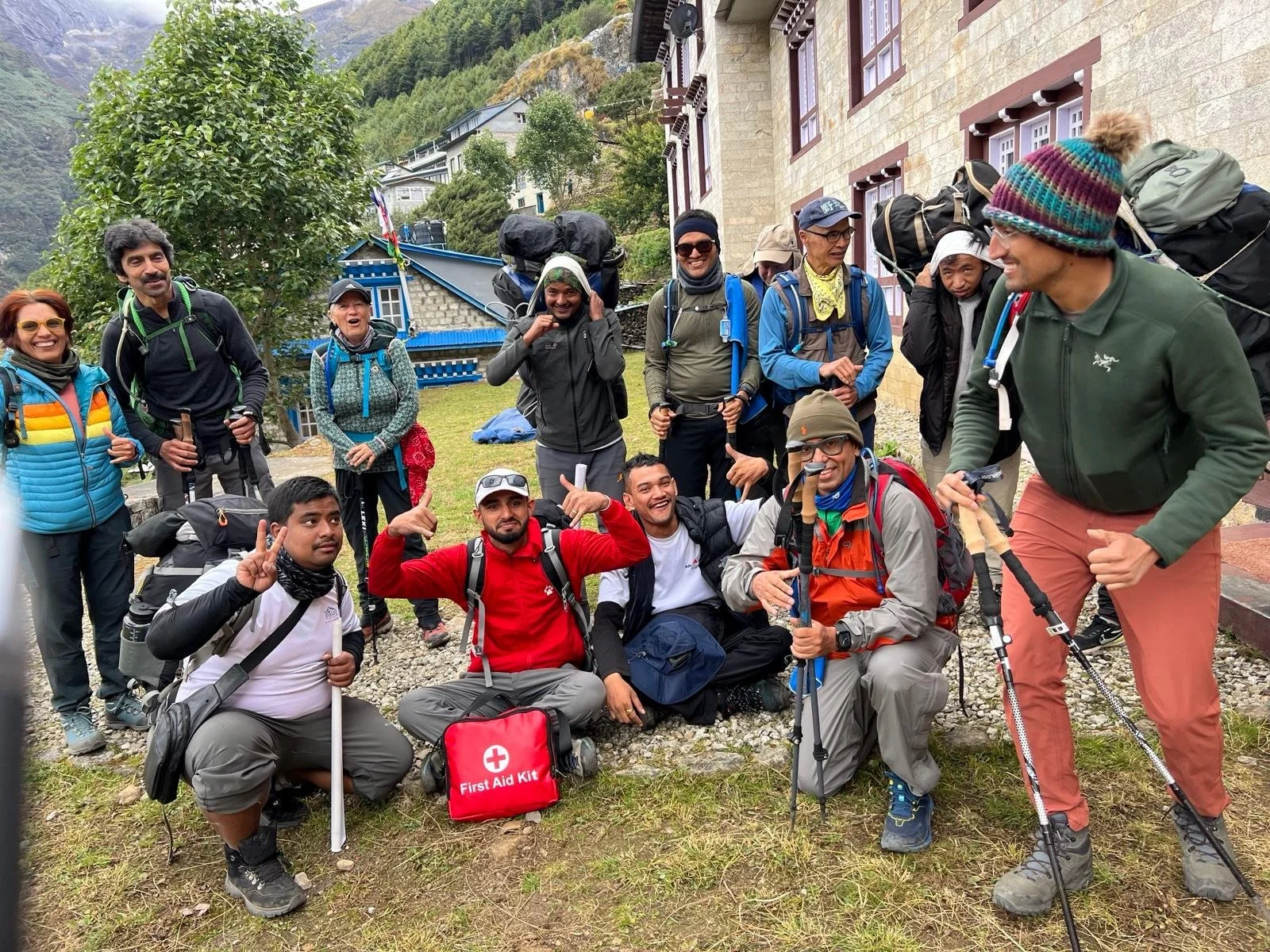
And Then There Was Ranjon
Ranjon was different.
He didn’t speak English. His Hindi was broken. This was his first time with an English-speaking group, and sometimes I could sense his nervousness. But Ranjon didn’t need many words.
He was vibrant. Full of life.
He sang. He danced.
I used to tease him: “You know, you are somehow a combination of my two sons. You’re flamboyant like my younger one. And Ranjan, well you know Ranjan. He’s right here with us.”
He would smile.
I think he got it.
Maybe that was part of why I felt such affection for him. He was between my two sons in age, and somewhere along that long journey to EBC, he began to feel a little like one of our own.
Maybe that’s part of the reason it’s all the more sad to know that because of this glacier collapse, he leaves behind a pregnant wife.
A child will come into this world knowing a father through photographs, through stories, and through the memories of those who knew and loved him.
There are some losses for which language feels inadequate.
This is one of them.
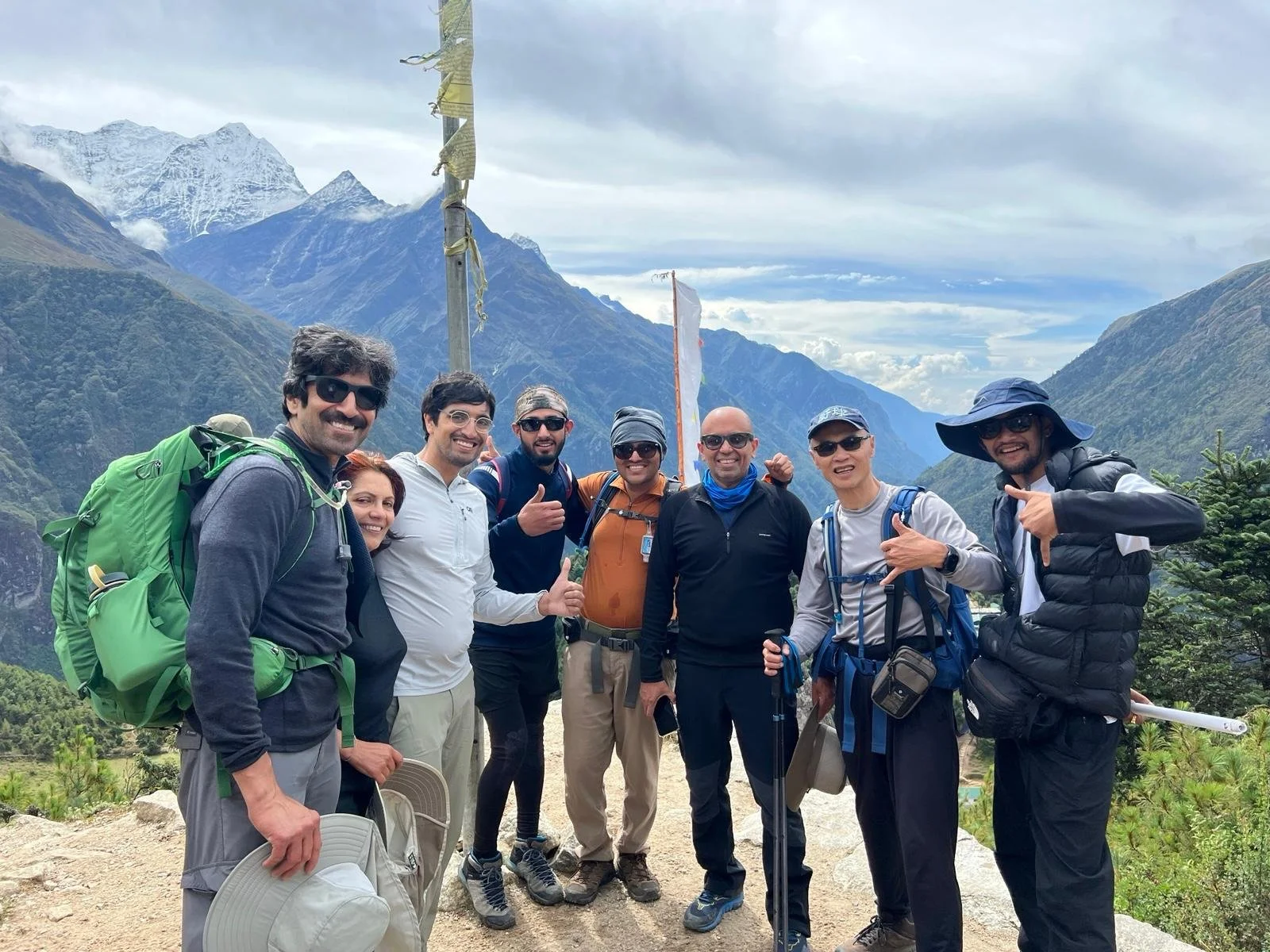
They Knew the Heartbeat of the Mountain
I was with Avi exactly three years ago. I keep wondering how much more he had learned in those three years. Because Avi didn’t simply guide people through the mountains, he listened to them.
He knew their heartbeat.
He listened to their songs and their cries.
Recently, Avi published a detailed investigative article about the Broad Peak avalanche. He examined what happens when things go terribly wrong in the mountains — investigating the dangers, gaps in preparedness, and the agonizing hours when lives might still be saved.
He asked difficult questions. Questions like:
Why was the rescue delayed?
What caused the delay in communication?
What might have happened if the avalanche had been reported sooner?
Could those lost hours have cost lives?
Reading those questions now feels almost unbearable because only weeks later, Avi himself would disappear in yet another natural disaster.
Avi knew the mountains. He knew how fragile life could be there.
He knew how quickly the line between safety and catastrophe could shift.
He knew their unending beauty. And he knew their danger.
Perhaps that is what it means to know the heartbeat of a mountain—to hear not only its songs, but its tender cries too.
Remembering Avi and Ranjon
On September 2nd, I shared photographs of Avi and Ranjon because I wanted to surround them, and everyone who loved them, with light, prayer, love, and hope.
Today, I share their photographs for a different reason.
I want you to know them.
Not as two names among the thousands lost and missing.
Not simply as two Sherpa guides.
But as Avi and Ranjon.
Two young men who laughed with us.
Walked with us.
Waited for us.
Protected us.
When the terrain became dangerous, they went first.
When I fell behind, they stayed back.
When I wasn’t sure I could take another step, they believed I could.
They Brought Us Home
Perhaps that is the part I am struggling with most.
The people who brought us safely through those mountains are not coming home themselves. And there’s nothing we can do to bring them home.
Three years ago, Avi taught me that there are things we can choose and there are things we must surrender.
The Mountain Chooses
But the mountain does not get to choose what we remember.
It cannot take away the lives that were touched.
The laughter.
The kindness.
The wisdom.
The courage.
Those belong to us now.
Avi. Ranjon.
You walked beside me for only a few weeks.
But some people walk with us for a short while and somehow become a part of the rest of our journey.
So, I will keep looking for the magic.
I will keep beginning again.
When the path becomes difficult, I know I will still hear you gently guiding me.
Vistare, vistare. Slowly, slowly.
One breath.
One step.
Then another.
Thank you, my friends.
This disaster has struck this small country to the core, leaving thousands still missing and now presumed dead. The need inside the country is still great. Not only were lives lost, but now they are suffering an economic crisis as a result of the fallout. So, if you’d like to make a financial contribution to help people in need, please consider a donation to one of these organizations that are on the ground helping: