
Visible and Invisible Shifts
It has been about a month since I returned from India. Progress has been slow, to say the least. Slower than I expected. Slower than I wanted.
There have been painful flare-ups and days when I thought I was getting better, only to find myself pulled back down once again. Back into rest. Back into resolve. Back into a body that is not performing in the ways I have grown to expect of it.
Visible and Invisible Shifts
My life has shifted in ways that are both visible and invisible. What once brought me joy – weekly hikes, long electronic-free walks, endless effortless movement – it’s all gone for now. In its place are hours of physical therapy, massage, short walks, cautious steps, and a very clear boundary: no stairs. Full stop.
I met this downshift with intention. Knowing this would require not just physical fortitude but mental steadiness, too. So, to this challenge, I brought with me everything I know. Meditation, mindfulness, intentional vibrations, affirmations, and connection. Plus love. So much love.
People showed up for me with so much of it, showering me with food, phone calls, check-ins, offering grace, giving hope, and even just being there for me. Presence alone can shift energy. Can shift outcomes. I thought I was giving myself space to create the inner balance that would help me find my way through this uncertainty.
That is, until I landed in the ER.
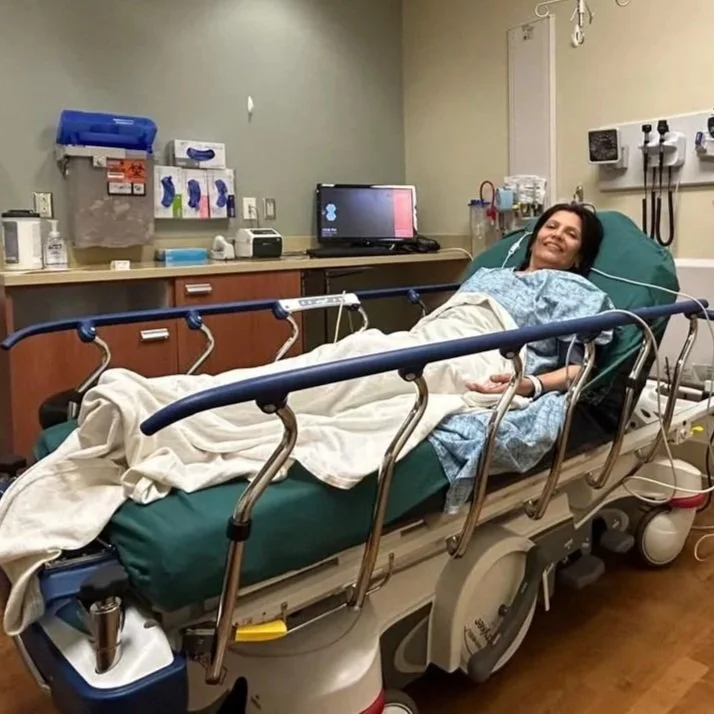
Old symptoms had resurfaced. Along with them came stories — other people’s stories, their worries, their prognosis, their fears. Somewhere in that mix, I began to feel a throbbing pain in my temples. Each evening, I would meditate, and it would get better. Until that night it didn’t.
Into the Danger Zone
By the fourth day of constant throbbing, I was worried. I checked my blood pressure. I have had high BP only once in my life, and that was 35 years ago. But here it was, flashing in the red danger zone.
I wasn’t alarmed at first. I have practices. I know ways to manage the body’s reactions. Ways to settle the mind. I started with breathing techniques. I practiced them for an hour. I checked again. Instead of being improved, both numbers had gone up. A few hours and more rising numbers later, I made my way to the ER.
Many hours after that, I was home with a low-dose medication and a doctor’s prognosis of stress-induced high blood pressure. Stress.
But I wasn’t ignoring my body or my healing. Or even my stress. I was doing everything I could to align my mind and body. But still, something was off, and the evidence was crystal clear.
Peace of a Beginner
What has been obvious to me throughout this journey is that I cannot manage this on my own. So, I reached out to my teachers. My yoga and pranayama (breathing practices) teacher Ms. Rao, whom I began learning from 25 years ago, invited me back into her classes — not as a teacher, but as a student once more.
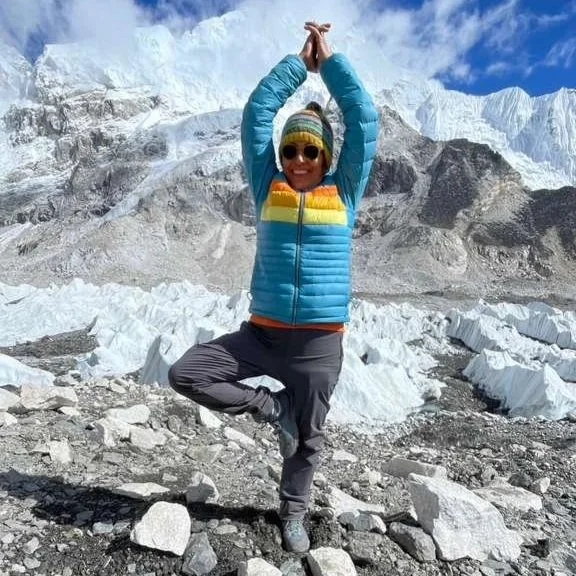
That transition was not easy. There is something humbling about returning to beginner’s space after years of practice. And yet, being a student again has brought me peace.
Observation Not Judgment
My Ayurveda mentor Dr. Shetty, guided me in another way. He reminded me of the practice of close observation. Not analysis. Not judgment. Just observation.
Dr. Shetty invited me to look at my intake — not just of food and drink, but of everything I was taking in through my senses. What I see. What I hear. What I watch. What I smell. What I read. What I surround myself with. Who I surround myself with. And then, just as importantly, asked me to observe how I respond to it. To notice what lingers. What agitates. What soothes.
Through this practice of observation, something else began to reveal itself: Prajñāparādha.
Knowing Better And Doing it Anyway
Often translated as the mistake of the intellect, that translation isn’t quite right. Prajñāparādha is about knowing better, and overriding anyway.
When I look introspectively, I cannot say this health journey began with my knee injury. Or even with my spinal cyst.
It began to take shape much earlier. So much earlier.
My pain had begun to grow roots even before the thought of summiting to Everest Base Camp became a dream. The reassuring urge to push through the pain. The impulse to ignore my body’s distress signals in order to achieve my goals.
And some dreams simply must come true. At any cost. At every cost. And for me, Everest was one of them. Eighty-six miles and 18,000 feet in elevation gain over eleven grueling days. Traversing rugged terrain in oxygen-depleted air required relentless effort and an undeniable spirit.
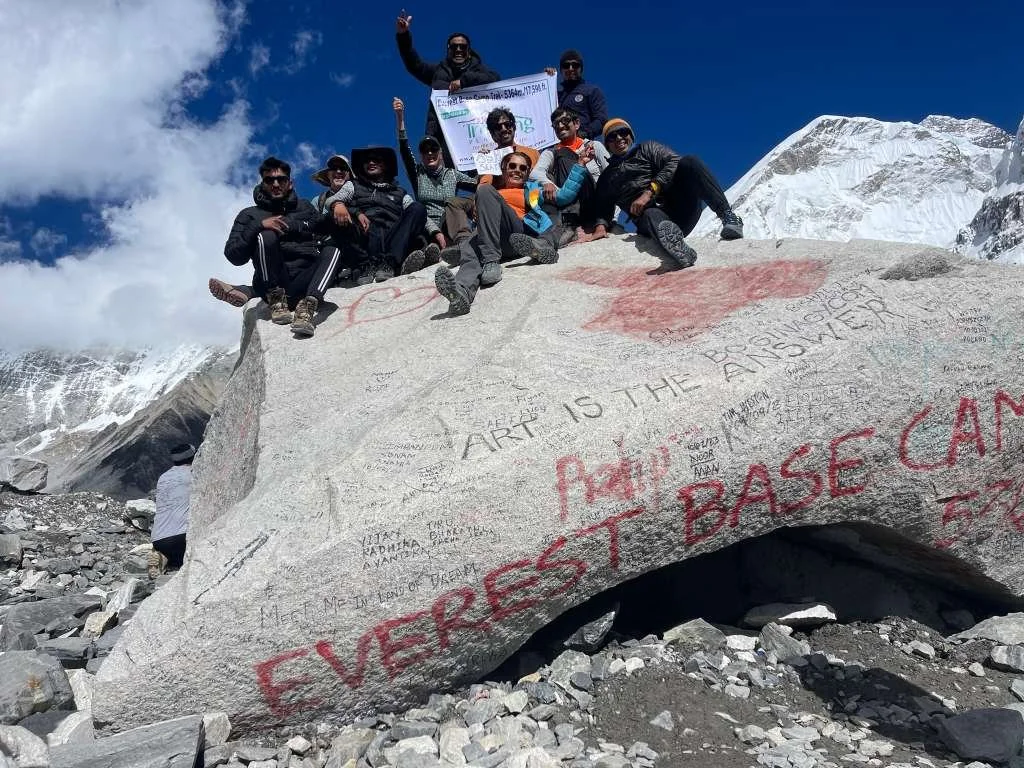
And I’d arrived with a hip that was already injured. At the time, doctors said I had piriformis syndrome. I was in physical therapy the very same morning that I flew out for my hike to the Himalayas.
My physical therapist demonstrated myofascial release and pressure-point therapies so my husband could perform techniques to bring me some relief while we were on the go. And yes, my hip was throbbing when I boarded the airplane.
So I knew exactly what I was bringing with me into that trek.
And I made a conscious choice to go anyway.
There was no confusion. No lack of awareness. Just personal negotiation and lots of wishful thinking that everything would be fine. That I would manage. That I’ve handled worse.
And for eleven days, I did. I pushed through the pain. I adjusted my gait. I gritted my teeth and smiled through the hip screaming at me. I even forced myself when I had to. And I ignored everything that didn’t fit my goal, including pain and discomfort.
So, this is where I have to be honest with myself. I am not writing this to beat myself up. My trek to Everest Base Camp was not a mistake. It was a choice.
Everest was a Meaningful Choice
There are moments in life that call us forward towards challenge, towards growth, towards something larger than ourselves. And sometimes we say, “Yes”.
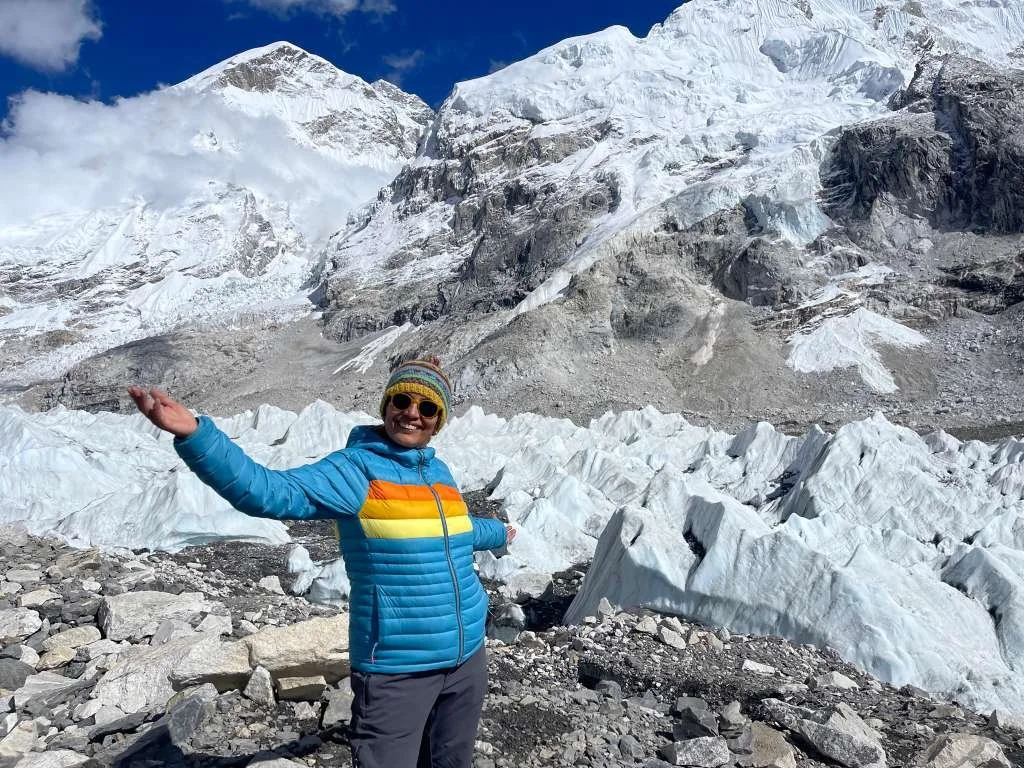
So, I don’t regret going. But as I sit with this reflection, I can see the journey and myself more clearly.
My injuries did not happen in a single moment. There was no dramatic fall. It was a slow accumulation of misalignments that resulted from me overstepping my personal boundaries. Small encroachments. Repeated overrides. Normalized self-denial.
It’s those times when you know you need rest, but you push through the exhaustion. When you know something hurts in your body, but you continue on day after day without seeking the guidance of an expert.
It’s when you know a conversation matters and that it needs to happen – but you delay it —sometimes for days, sometimes for years, sometimes forever. This is Prajñāparādha.
Ayurveda describes three ways this happens. Dhi, is when our understanding becomes distorted. We misjudge what is beneficial for ourselves and what is harmful. Dhriti, is when we know what is right but lack the will to act. Smriti is where we forget past consequences and repeat the same patterns again and again.
Healing is Also What You Consume
Through the simple act of observation, I began to notice what I was allowing into my life. Healing is not just about health-related modalities. It is also about what you consume. And that is when I began to observe the quality of energy around me.
There are moments you can feel. Someone not listening - just waiting impatiently for their turn to talk. A sense of disconnection that leaves a vacuum in the conversation. Comparison or dismissal of someone else’s experience. Perhaps even a bit of personal satisfaction in another’s struggle. Schadenfreude.
It’s as if someone else’s struggle is a way to reassure ourselves that we are okay. Personal pain lessened through comparison with another person’s struggle.
Through close observation, I began to notice how my body responded to witnessing Schadenfreude in action. My chest tightened. My gut contracted. I felt a subtle unease. I began to see that my body was not just healing from injury. It was responding to everything I was taking in.
That observation led me to make an important choice. One to prioritize my well-being. To step away when I need to. To not absorb everything. Not to stay where it doesn’t feel well. To trust myself and my body’s signals.
Prajñāparādha cannot be fixed overnight. But it is something to be aware of. Through this awareness, we can begin to build a little more understanding. And then, slowly, realignment.
This journey is not just about my knee or my spine. Or even my hip. It is about the injuries beneath the injuries. About the visible and the invisible pain. About all the ways I have learned to override myself. The ways I have normalized self-denial along the way. And all the ways I am being invited to listen and respond anew.
Originally published on my Substack here: https://www.mindfulleaders.info/