360 Feedback & The Importance of Gratitude
There’s a conversation happening in boardrooms and Human Resource departments right now that goes something like this: How do we prepare our leaders for the AI era?
The answers tend to cluster around the same themes. Upskilling. Digital fluency. Change agility. Learning to work alongside LLMs. All of it is reasonable. Thing is, most of it is missing the point.
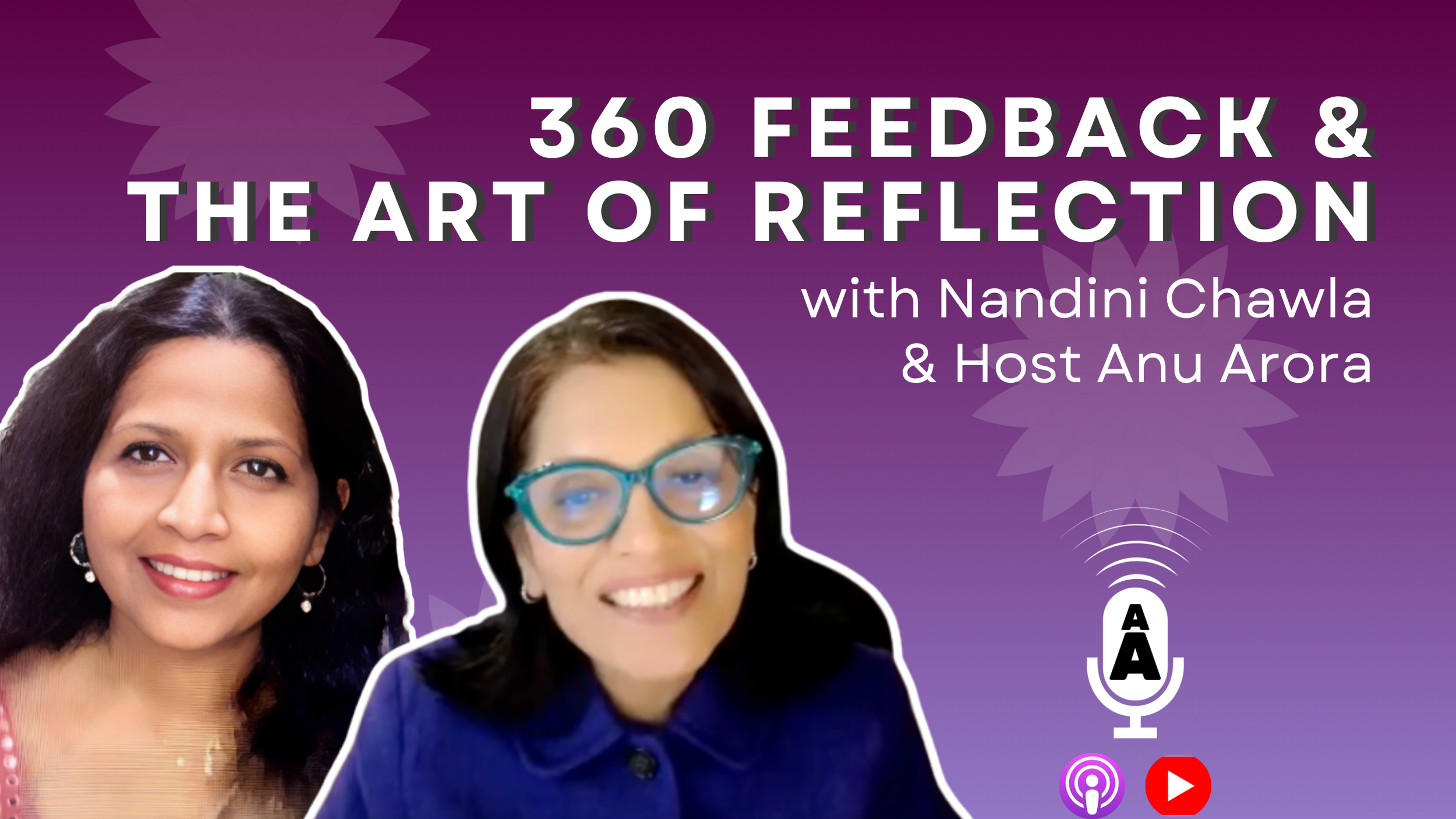
I recently spoke with Nandini Chawla, CEO of TV Rao Learning Systems. With 25 years in leadership development, as a PCC-certified coach, and one of the most grounded thinkers I’ve encountered on what actually makes organizations work, Nandini’s answer to the question of how to prepare leaders in the AI era really surprised me.
Go back to basics, she said. The most fundamental of all is: how can we be more human?
The Case for Connection
As artificial intelligence becomes more embedded in the fabric of organizational life — inserted into the tools we use, used to help drive the decisions we make, developing the processes we run — the one thing it cannot replicate is genuine human connection.
And connection is important. People know when they are faced with inauthenticity. And they reject it. They don’t engage with it. No matter how seamless the interface or how sophisticated the system, people can feel the difference — and they respond accordingly.
Nandini made an observation that really made me think. She said we are in a moment of collective fragility. After the emergent period of the pandemic, people came back to work still burdened by things they hadn’t fully processed during that time.
These unprocessed feelings are still helping foment the uncertainty that people are experiencing in an AI-disrupted economy. The implied contract — not to mention the psychological contract — between organizations and their people is more fragile than it was even just five years ago.
Add to that mix businesses that are doubling down on automation with their foot on the gas for maximum velocity, hurtling into a brave new world. One that’s simultaneously pulling back on real-world human infrastructure. The pressure to move fast is real. But so is the cost of moving fast without strong direction and trusted leadership.
Leaders Who Matter Navigate
The leaders who will matter most in the next decade are not the ones who understand AI the best. They are the ones whose teams trust them enough to believe in what’s actually happening and to believe in their ability to navigate uncertainty together.
That kind of trust is something built slowly through consistent behavior over time – through difficult conversations handled with care, the admissions of not-knowing everything, and decisions made with enough transparency that people feel included rather than subject to outcomes beyond their control.
Prioritizing Gratitude
Finding your way when the road ahead is unclear demands emotional stability and mindfulness. Nandini’s firm, TV Rao Learning Systems, is now including elements of gratitude in its 360-degree feedback tools. When you embed gratitude into the systems people actually use, you invite them to slow down and genuinely reflect on it. When something as seemingly intangible as gratitude can turn into a measurable data point, it’s a signal that an organization actually values the full humanity of its workforce, not just their output.
The Deeper Challenge
We’ve spent decades making the case that soft skills are, in fact, hard skills — and that something like emotional intelligence has real, demonstrable ROI. We’ve emphasized the importance of company culture as a key driver of performance, not just a byproduct of it. And we’ve done that work knowing we were always swimming against a tide that favors what’s measurable over what matters.
But what we’re seeing now is that when things get crunchy and uncertain, organizations are still cutting their investment in human infrastructure first — coaching, training, development programs, the reflective time that leaders and leadership teams are given to aspire and inspire.
A Strategic Miscalculation
The instinct to make budget by cutting headcount is understandable, but it’s also increasingly a strategic miscalculation.
The irony is that AI should be making it easier for us to develop leaders, not harder. The more we automate the transactional, the more we can focus on the qualities and conditions of leadership that can make a real and lasting contribution to the organization. We should be gaining time, space and bandwidth for deep organizational development — not losing the will to invest in it.
When the technological playing field levels out — which it inevitably will — organizations will be competing on the quality of their leaders and in their ability to navigate uncertainty. The differentiator won’t be who adopted the best tools the fastest. It will be those who built the most trusted and capable leaders.
Leaders who stay intentionally, intuitively, and stubbornly focused on workforce development are not behind the curve. They are ahead of it.
Key Takeaways
In a period of AI-driven uncertainty, Nandini believes organizations need to go back to basics and ask how they can be more human. That includes how leaders communicate change, such as a restructuring, even in companies adopting AI quickly.
360-degree feedback works best as a development tool, not an assessment. When people fear it will be used for promotion or other decisions, they don't fully embrace it.
A holistic 360 can go beyond the workplace. Nandini's firm invites senior leaders to include family members, such as parents or older children, among their raters.
A 360 needs preparation on both sides. Raters should be asked to give feedback that is truthful but delivered with grace, and participants need a coaching conversation afterward, because feedback without context is easy to misread.
At senior levels, ignorance is not bliss. The more senior you become, the more people tend to tell you only what you want to hear, so honest feedback is a sign that people care and believe you can improve.
Leadership is often neglected because it's harder to measure than targets and technical goals. Nandini sees regular reflection on how you achieve results, not just what you achieve, as the way to make it a priority.
Since COVID, TV Rao Learning Systems has built gratitude directly into its 360 instruments. Putting gratitude into a process people actually use is more powerful than leaving it to good intentions.
Early in her career, Nandini channeled her insecurity about being young into deep preparation. She also learned to set her agenda aside and listen when a room needed it, which changed how her workshops worked.
For anyone who wants to grow as a leader, Nandini recommends two habits: ten minutes a day of reflection, and continuous learning from everywhere, from a colleague's conversation to a family debate about Friends characters.
Quotes from this Conversation
"Doing the 360 without having a coaching conversation is like getting your executive health checkup report without anyone to talk to." — Nandini Chawla
"At senior levels, ignorance is not bliss." — Nandini Chawla
"If there is so much of AI, which is all artificial, then what's natural is the human nature." — Nandini Chawla
"No matter how busy you are, you can make everything a source of learning." — Nandini Chawla
"Life itself is a source of learning." — Anu Arora
Questions this Episode Answers
What is 360-degree feedback, and how should organizations use it?
Should 360 feedback be used for performance reviews or promotion decisions?
Why would a 360 include family members?
How can leaders stay human in the age of AI?
How can organizations build gratitude into their systems?
How can a young facilitator or leader overcome insecurity about age and experience?
Where should someone start if they want to become a better leader?
-
Anu Arora (0:03)
Welcome to the Mindful Momentum Leadership Podcast, where we honestly talk about what it takes to lead when the world refuses to slow down, and why presence matters more than ever.
Today's conversation is a special one. I met today's guest not through LinkedIn or a formal introduction, but as a neighbor during my recent stay in Bangalore. What started as a simple conversation... actually, we met over getting some details of a handyman. Then I got to learn about Nandini, and that quickly revealed the depth of experience Nandini has in the field that is so dear to me.
Nandini Chawla is the CEO of TV Rao Learning Systems, a leadership and talent development company that has worked with organizations across industries to build leaders, strengthen teams, and shape culture. And what makes her perspective unique is she brings the lens of someone who has grown through multiple roles herself, from engineering to sales to marketing, and now leading an organization that develops leaders. Very recently, they celebrated their 30th anniversary, of which Nandini has been part for 25 years.
Nandini Chawla (1:43)
Yes, absolutely.
Anu Arora
Yeah, and I am really looking forward to our conversation today. Welcome, so glad to have you.
Nandini Chawla (1:52)
Thank you so much, Anu. It's my pleasure and privilege to be on your podcast.
Anu Arora (2:00)
So, Nandini, when we were talking, we were talking about your journey, and it's been fascinating. You know, from engineering to sales to marketing, and now CEO of this company, which is serving globally. There are so many places you go and do leadership and talent development. Tell me how this journey has been, like these transitions, and what's brought you here?
Nandini Chawla (2:28)
Yeah, so I think I've always been a hardworking kid, you know, always given my best for whatever I do, and I didn't have any clear likes or dislikes growing up. So, as any ordinary student, did my 10th, did my 12th, all of it was in state board. My entire schooling happened in Gujarat, and I think at that time there were largely two professions: either you do engineering or you do medical.
Anu Arora (2:58)
That's correct. I did engineering for the same reason.
Nandini Chawla (3:02)
Exactly. So I think it's a common, you know, stereotype. At that time, you didn't have too many options. You did have other options, like a BSc or a BA, but somewhere in my mind, the whole idea was, you know, what can I do so that I can get a good job at the end of graduation? That was a simple goalpost that I had in mind.
Anu Arora (3:24)
Yeah.
Nandini Chawla (3:25)
Not really sure about, you know, what I will do after that. So I did my engineering, got a couple of jobs on campus, and that's when I realized that I'm not likely to be the type who will work and then get back to studies, because by then I had this knowledge about myself: it is best if I continue at a stretch and finish my entire education. So though, you know, my parents did want me to work for a couple of years before doing a postgraduation, I said no. And finally, you know, I studied for the entrance exams and got into Narsee Monjee Institute, Mumbai.
And I think initially I did have sparks of getting into human resources, because my dad was a professor, you know, who kept talking a lot about HR. So I've grown up listening to, you know, some of the books, or some of the theories that he had, and I knew at some point I would do HR. But when I did my MBA, I specialized in marketing with international business, because Narsee Monjee was known for marketing, and that's how the journey began. So it was from engineering to management, and then I joined Titan Industries in the area of sales and marketing. And then I worked in corporate for a couple of years, and then, after around four and a half years, I moved out. At that time, TV Rao Learning Systems was looking at setting up and expanding in the south, because there was an IT boom. There were a lot of IT and ITES organizations. So a very senior colleague of mine, Dr. Gopal Mahapatra, and I, we set up the Bangalore branch of this organization.
Anu Arora (5:16)
Oh, wow. What an amazing journey. And I remember you telling me that you used to accompany your father on these, you know, his lectures, and sometimes you'd get into discussions about leadership. Do you think that kind of influenced your early years, to think about leadership in a different way?
Nandini Chawla (5:40)
Yes, it did, but I think I had more theoretical knowledge. I think I was still very raw. I didn't really get too much knowledge until I joined TV Rao Learning Systems. We used to do something called a 360-degree feedback, and it was through that entire journey that I really got a deeper insight into what 360 is and what leadership is all about. So I think, for me, I was very raw. I had some broad understanding. I think there are so many definitions of leadership that it's very nebulous, if you really have to say what it means. But I think, as I was reading and preparing for a workshop on 360, there were some books that came my way, and one of them was a very nice model by, you know, two gentlemen, Zenger and Folkman, and that model very clearly explained what leadership is all about. So I think that got my interest. And as I, you know, dug a little deeper, I worked with a lot of leaders, saw so much of the power of, you know, a simple process like a 360. I think that's when I started getting clarity.
Anu Arora (6:53)
Were there some insecurities before you joined in this kind of a role, you know, on how you take on being the CEO of this company, and, you know, go and work with large organizations? You work with multinationals and really big names.
Nandini Chawla (7:13)
Yeah. So when I initially joined, I think I had five years of corporate experience. And yes, I did have... I think the insecurities were more in my mind, not as much in how I felt others viewed me. It was more in my mind. And one of the biggest things is I didn't have age on my side. I was young. And, you know, let's say 25 years back, I looked a lot younger.
Anu Arora (7:41)
You still look very young. 25 years back, that must be another life you're talking about.
Nandini Chawla (7:50)
Yeah, so I used to feel, you know, a little worried: will people take me seriously? And very often, the participants in the workshops I used to facilitate were way senior to me in age and experience. So these were the things that would keep cropping up, those insecurities. But, you know, what I did? I used that to prepare a lot more. I would read a lot more. And, you know, though one has grown up in that atmosphere, I think that insecurity, I channelized it. I would prepare a lot more for these sessions. I would study everybody's 360 report so that I kind of knew who the person was that I'm talking to.
Anu Arora (8:28)
Wow. Wow, wow. And you said that, you know, once you got into the job, you really understood what leadership was. What did you discover? What were the key insights that shaped the next decades of your life?
Nandini Chawla (8:46)
So, you know, when I started, initially, maybe the first couple of years, I was a little bit like a school teacher. You know, I would have... this is the syllabus for a workshop, I must complete this. If I don't complete this, you know, I'm not doing justice. Even though the participants may not know what all is on the agenda, I was very, very regimented. I wouldn't go at a pace looking at what they want. But I think that's when I worked with Gopal, and he gave me a very big input. You know, he said, always try and sense what people want and go with that. So in one of my early workshops, I was doing a performance management workshop, and there were a lot of participants who were very, very dejected, because they had not got promoted on time. And I realized I was here to teach, you know, to share with them a philosophy of performance management, and they had all come to the workshop with a lot of internal turbulence. That's when I decided, you know, let me keep my agenda on the side. Let me just get them to share what they are going through. So I just let my entire schedule be derailed, and I said, "Come on, speak out whatever has happened to you."
And for the next half an hour, there was catharsis. All of them said how, you know, they didn't have managers who actually spent time developing them. And at the end of it, I just told them, I said, "You know, I feel bad about whatever has happened. But for the next half a day, the only objective here is that when your juniors come for such a workshop, I don't ever want them speaking this way about you. What happened to you, we can't do much about, but what you can do with your juniors, let us change that narrative." And I realized how the entire workshop energy changed, because just stopping, understanding where they are coming from, and keeping your agenda on the side helps you go through the whole workshop in a much nicer manner. It's a win-win for both sides. So I think I've had these kinds of little instances which have, you know, helped me grow, helped me understand, and then I moved from this regimented approach to a workshop, and I became a lot more flexible. I also started enjoying... initially, I used to be a little skeptical of performance management workshops, you know, because there are so many people with so much emotion. So I think I've just been lucky. I've grown along the way and learned a lot more. The theory is what I understood through all these workshops.
Anu Arora (11:34)
And you demonstrated it through example, in some of the behaviors which you were probably wanting them to shift. Those are the behaviors you then started bringing to the workshop. You were in listening mode. You were in understanding mode. You were in, you know, empathy mode. And then you were setting them up for success from that place, where they opened up to receive more. Instead of, you know, if they are afraid and they are in complaint mode, they won't be absorbing what you are teaching them.
Nandini Chawla (12:10)
Yes, yes. I think, you know, like the way your podcast is titled, I was a lot more mindful, I think, and that started only in my journey with TVRLS. Otherwise, I don't think I was very mindful. It was just do mode. You know, whatever comes on your plate, just execute, do. Not too much thinking.
Anu Arora (12:32)
Yeah, that's amazing. And it reflects, right? It reflects on the organization you have built, the teams you have formed, the companies you have gone and trained, the long-term engagements you have had with your partners. It's all reflected in all the success you've had.
Nandini Chawla (12:51)
Yeah, I think I've just been fortunate.
Anu Arora (12:54)
You are humble too. So the other thing, Nandini, is you have created the state-of-the-art 360 feedback system. This system exists in various forms, but the original is what you have brought to the world, and it is now used all over the world, even by some of the largest corporations. But yet, when you and I were talking, you said they don't quite fully understand it, and can sometimes misuse the system. So can you help us understand what it is, what 360 feedback systems should look like, and what's missing today in how people view it?
Nandini Chawla (13:41)
So, you know, 360-degree feedback... Professor Rao, our chairman, used to use it at IIM Ahmedabad itself, when they used to do programs for entrepreneurs. But we were very late. We didn't brand it as 360. It was branded, probably, by the US. So we used to just call it multi-rater feedback. And they used to use a lot of this in their management development programs. But post that, I think a lot of work... we are probably a unique consulting company. We have done four conferences on 360-degree feedback. We have got our clients to write papers, and we have, you know, published them. So a huge amount of work that we have done in 360. And one of the things that we still see is that there is a lot of misconception and a lot of fear also. So typically, I think a tool like this is best used not as an assessment tool, but more as a development tool, because you have enough tools, and the organization has to give you, you know, numbers to assess your performance. But what is the chemistry that you're really generating at the workplace? That is something where a 360 really gives you a lot more insight. And an example of our holistic view is we even invite family members into the 360. So even if you are in corporate, we are doing it for, you know, heads of departments, or for a CEO, we say, "Please invite a few of your family members." You know, you could have parents. You could have children who are old enough to answer.
So number one, I think a lot of people... there is some kind of apprehension: is this going to be used for promotion? Is this going to be used to take decisions? Therefore, people don't wholeheartedly embrace it, and they don't, you know, realize that it's largely a tool meant for development. That is the first thing. The second thing is, I think, the preparation that is done. Because you need to not only prepare the participants, but also have some sessions to help all the respondents appreciate it. So imagine you choose 10 people from whom you want feedback. You should be talking to all those 10 and sensitizing them: you know, "Please give feedback which is truthful, but with some amount of grace." So that is also something. And also, you know, doing the 360 without having a coaching conversation is like getting your executive health checkup report without anyone to talk to.
Anu Arora (16:16)
Yeah, I mean, they make their own call. "Oh my, I am dying, because my number is high," without looking at other numbers, right? They will see the one which is spiked up and freak.
Nandini Chawla (16:31)
Yes, yes. And, you know, 360 is contextual. So let us say you have a team, and your entire team never listens to rules and regulations, and they never come on time. So you may have a leader who needs to be critical. That is a context. So I'm not going to tell that leader that in your current situation, you have to be critical, but maybe I'll work with the leader and ask, "What do you do about these team members? Do you need to make sure that they move to another department?" So 360 is contextual, and therefore, unless you have a dialogue with the participant to understand the context and come up with a clear roadmap... you know, that level of investment, I think it will be nice if people can appreciate and understand the power of something like that.
Anu Arora (17:19)
It's so, so powerful, and it's a growth tool.
Nandini Chawla (17:23)
Yes.
Anu Arora (17:24)
It's basically... it's not an assessment, per se. It is something which can help people grow to the next level of leadership.
Nandini Chawla (17:34)
Exactly, exactly. And I think, you know, the ability to get a huge amount of feedback, to hear things which are not so positive, and to go out saying, "What can I do to use my strengths more? What can I do to work around my areas of improvement?" I think that is where the journey of leadership actually gets strengthened.
Anu Arora (17:54)
Yeah, I love that. I love that. I also love something else you said, you know: tell the truth, but with grace. Because it's very difficult to give constructive feedback. I was a manager in my last life for many, many years, and I knew how difficult it was to give feedback like that, but also how difficult it was to receive feedback like that. I would see people just shrink, become small, become defensive. And so I think a coaching session to help them prepare, and view this feedback as an opportunity to grow versus shrink, that it is not pointing fingers at them, it is helping them see themselves from a broader lens.
Nandini Chawla (18:54)
Yes, exactly. And, you know, at senior levels, ignorance is not bliss, because imagine you have no clue what you're doing. And I think the more senior you go, you are surrounded by a lot more people who will only tell you what they think you want to hear, you know. So what do you do to make sure? And therefore the preparation has to be very, very solid. So we tell them, if you ever go for an executive health checkup, and the pathologist tells you you have got very high cholesterol, you are not going to shoot the pathologist down, right? Because the person is trying to help you. So similarly, even in a 360, people are trying to help you. So I think if you are able to see it with that lens, then you should technically be more grateful that, you know, people are showing you the mirror, because they care for you, and therefore they believe there is hope for you to do something better. So I think that preparation is needed, to help them interpret the feedback, and after it, come up with something concrete that they can do. Just pick up that one area of strength and how they can help others with it, or just that one area of improvement and how they can subdue its ill impact. That entire cycle is necessary for something like this to be successful.
Anu Arora (20:15)
Yeah, yeah. And you have had amazing success with this. Is it because you set it up like this? When you go and work with companies, you have a whole process around how you implement it.
Nandini Chawla (20:28)
Yeah. So, you know, for us, success would be when a person who has gone through this themselves reports change. That, for us, is success. And in some cases, we have had mixed results, but we have always seen that when we do an effort review, where we ask people one year down the line to share with us, you know, what has been the impact, 90% of them say that it has helped them in their professional and their personal life. There are 10% who, you know, maybe their heart was not in it. Maybe, you know, the organization mandated it. So you will always have a certain set of people who don't believe, you know, in some of this. But I think if 90% believe and feel they have themselves changed, there's a self-reported change. I think that's good for us.
Anu Arora (21:22)
Yeah, I like that. You know, the person says they feel that they have changed?
Nandini Chawla (21:28)
Yes. You know, because let's say you've lost weight. I mean, only the person who has lost it, even if it's one kilo, can feel it.
Anu Arora (21:35)
Yeah, yeah.
Nandini Chawla (21:37)
Unless you lose five, six kilos, no one will even... you know, you know the truth.
Anu Arora (21:42)
Exactly. Yeah, yeah.
Nandini Chawla (21:45)
So we're happy with what they say.
Anu Arora (21:48)
Yeah. You've had a range of experiences in terms of working with different types of organizations, different types of leaders. What do you see as the biggest challenge with leadership today?
Nandini Chawla (22:04)
So I feel a lot of the time, many of the people in corporate focus on what is measurable and where you get immediate return. For example, there is a lot of focus on technical capability, or there's a lot of focus on your goals, because it's measurable. It can be put on, like, a board. You know, it is there for everyone to see. But when you look at leadership, it's not as quantifiable as, let's say, turnover targets, or, you know, anything else, like, let's say, quality parameters, etc. So because it is not so clearly measurable, I feel sometimes people are more comfortable chasing things which are tangible. You know, it's easier, because you can see results much quicker. That's number one. Number two, I think very often, in many people's minds, this therefore is not a priority. And for it to become a priority, I think a necessary condition is some amount of reflection. You know, unless you reflect, and unless you think back, and you don't reflect only on the technical or on the achievement, but you reflect on the way one has gone about achieving those targets, or the impact you have created, or whether your words have created a positive or a negative impact, or what kind of a role model you are... unless reflection is done on that, you don't end up giving it importance, and you continue to chase things which are easier to measure.
Anu Arora (23:53)
And one of the challenges is this VUCA world, which is moving at such lightning speed. I would look at how AI is changing the way the, you know, job market looks today, and people are more in survival mode, sometimes, right, instead of thriving. Has it changed leadership in any ways? Do you see, with more change happening, is it becoming worse? Is it becoming better? Or do the same challenges just continue to exist?
Nandini Chawla (24:31)
No, I think there are cycles. And we are now in a cycle where, like you said, there's a lot of confusion and uncertainty over AI. You know, there is a lot of it. But I think, with all the narratives that are going around, for many of the organizations, I think we have to go back to basics. And one of the basics is: how can we be more human? You know, because in a lot of what's happening, I think only if you're more human can you understand what people are going through. And you have to be human in the way you're treating people. So even in companies where there's an infusion of AI, the way you communicate to people, even if, let us say, for some reason there may be a change, a restructuring, or whatever it is, I think you have to be more human in today's age. Because if there is so much of AI, which is all artificial, then what's natural is the human nature. So I feel somewhere the moment will come where we will pull back, and this entire thing of bringing out the humanness, especially in organizations, and also in functions like HR, functions like L&D, or even the top C-suite... I think this is a time where we have to be more of that, because there are too many things which are beyond our control. There are too many things which have created so much dynamism. And post-COVID also, you know, there is some sort of fragility in people. And therefore, I feel this is going to be very important. So two things: one is being more human, and more gratitude.
Anu Arora (26:22)
And explain to me how we would bring this to organizations. How will a company like yours take it to organizations? Because I totally agree with what you're saying. I feel that the biggest differentiators of good leadership will be the ones who now step into humanity, even at a level higher than ever. So how can organizations like yours, and mine, I'm basically a two-person organization, bring it to the companies?
Nandini Chawla (27:06)
So, you know, a simple thing: we were talking about 360-degree feedback. So what we are doing, actually, post-COVID, in all our 360-degree tools or instruments that we are using, we have included gratitude. You know, for whatever it is: gratitude towards the people who have built the organization, gratitude towards people who serve, you know. So we are trying our level best. We have included it, because when you include it, and you get feedback on that, in a natural way you put the spotlight on it. So we are doing that. And similarly, in a lot of the examples we give, the narratives we give, we are including a lot of this being human as well. You know, the examples that we take... for example, let us say there is a situation where someone may have to let somebody go. But what is the way in which you do it? Is it a sign that you get sleepless nights before? And there is a way, you know, a more empathetic person would say, "It is something that we are going through. But at some point, if things reverse, you are the first person I will call back," you know, versus being very, very stonewalled about it. Or a simple thing, not even keeping people in the loop as to what's happening all around. So whatever you can do to help them. Just that little bit of a human touch. Sometimes it could also be asking a person, "How are you?" but being totally mindful of the answer. Because sometimes it's cursory: "Oh, how are you? I've got to go." Yes, you don't really want to know, you know, the details. So, little, little things. I think the examples we are giving have changed. So these are the little ways in which we're, you know, kind of speaking about it in forums, wherever we're invited.
Anu Arora (28:56)
Yeah, yeah. No, I like the idea of bringing gratitude into a system itself, right? You know, people have talked about gratitude, and "Oh, think of three things you're grateful for," but building it into the processes and systems, you know, you're creating a habit of it now.
Nandini Chawla (29:17)
Yes.
Anu Arora (29:19)
When they're filling up the form, they are thinking of this.
Nandini Chawla (29:23)
Yes, exactly. So that itself is a mechanism to, you know, help people focus on it.
Anu Arora (29:29)
Right, right, right. When you look at your career ahead, how do you think of, you know, the next 10 years, with all the shifts happening? Or, you know, how is your organization going to evolve and grow? Where is your mind and heart at?
Nandini Chawla (29:51)
That's a very interesting question, and because of what's happening, you know, all around, one does think about it. 10 years is a little bit long-term, but next maybe five years, I think.
Anu Arora (30:02)
Okay.
Nandini Chawla (30:03)
Yes.
Anu Arora (30:05)
Five. I'm not deciding how many years you want to be doing what you do. Yeah.
Nandini Chawla (30:13)
So I recently became a PCC coach, so I've moved to the second level of, you know, coaching. I've been doing coaching for the last couple of years, and I'm seeing a lot of, you know, positive output and experience. So I have a feeling, for the next couple of years at least, I would like to do a lot more in the coaching space. We have a couple of other colleagues in TVRLS who are, you know, ICF accredited. So we are looking eventually at, you know, doing more programs on coaching, mentoring, and helping people, you know, navigate through and get to a better future, or better versions of themselves, through coaching. So that is one thing that I certainly feel we will do. The second thing: we do a lot of consulting work for corporates. We are looking at doing a lot more even with management institutes. So we want to kind of catch them young, and see, with all the knowledge that we have learned through consulting, how do we influence them, and how do we also get more people interested in the space of talent management and organizational development. I do see a lot more knowledge sharing. I do see a lot more webinars. I do see a lot of consulting in areas of leadership development. A lot more curated programs, you know, which are over a year. They're not just, you know, come and go, but a little extended, where we hand-hold, where you could have a coaching track, you could have a learning track. So I see, you know, more deeper engagements, and also reaching out to more students, and changing the mechanism of knowledge transfer.
Anu Arora (32:02)
And teach them young. I mean, leadership is not often taught. How to receive, you know, feedback that helps us grow is not taught. You know, there's so much privilege now in, you know, certain sectors of society, where children are being brought up with so many things that they kind of take everything for granted. So when the first time they are told that you suck at this, or you need to get better, it comes as a shock to them. Nobody's ever told them.
Nandini Chawla (32:43)
True. And sometimes, you know, if someone external tells them, it's better than your immediate people...
Anu Arora (32:49)
Yeah.
Nandini Chawla (32:49)
...telling them. So, you know, use it as a vehicle to influence them. And I think sometimes teaching youngsters is refreshing in its own way.
Anu Arora (32:57)
I know, I know. Yeah, this is amazing. So for our listeners, you know, as they are listening to you, and they are intrigued by the work you have done and all the things we've discussed so far, and they want to become a better leader themselves, where would they begin?
Nandini Chawla (33:26)
I think very important, like I may have mentioned, is a simple practice of some time for yourself, which is either reflection, or it could be, you know, just maybe even 10 minutes a day, either in the morning or in the evening before you, you know, sleep. Some time to reflect. I think that is something very important, because it's that mindfulness. You know, again, the way your podcast is titled, somewhere, if you can incorporate moments of mindfulness, where you can reflect on what you did do, what you didn't do. That's number one. And number two, I think, being a constant learner, because the more you learn, the more you know how much more you don't know. And I think, with learning, one of the things I have learned from life is, no matter how busy you are, you can make everything a source of learning. So even if you look at movies... you know, sometimes we have a discussion at the dinner table on Friends. You know, everyone has seen the serial Friends, and we have this discussion on which character do you like? Are we judging somebody too much? And why do you like a particular character? So learning can be from anywhere. It could be from the help in your house. It could be from the serials that you watch. It could be from a movie, or it could be through formal education. Maybe you set a target that every year I will do one new program. So I think the more you learn, it just helps you broaden your horizon, and that itself is a good starting point on this journey. So I feel somewhere: time to reflect, and learning from everywhere. Your sources of learning could be a great conversation with a colleague. It could be observing, you know, your seniors interact with somebody. It could be from the TV serials or the movies that you watch. So I think somewhere, if you just turn on that switch, that yes, everything can be a learning experience... I think these are two very simple mechanisms, and they're sure to give you a good boost on this journey.
Anu Arora (35:43)
And I love it. It can be simple. When people say, "I don't have time to learn something," that's not true. I mean, life itself is a source of learning, and you are inviting us to do that. Such a beautiful invitation. We can stop at that. Is there anything else you'd like to add?
Nandini Chawla (36:06)
No, that's it. I think it's been wonderful. You got me to think while I was answering all your questions. Got me to, you know, think a little, reflect, go down memory lane. It was like a good recap for me as well, you know. So I thoroughly enjoyed it.
Anu Arora (36:23)
Wow. It's been a pleasure speaking to you, Nandini, and we'll see you on our show again, because this is all about mindful leadership, and you are an epitome, an example, of mindful leadership. Thank you for joining us.
Nandini Chawla (36:38)
Thank you for having me.
Resources
Episode Details
Guest: Nandini Chawla, CEO of TV Rao Learning Systems
Host: Anu Arora, executive and team coach
Series: Mindful Momentum: Leader Podcast
Published: May 20, 2026 · 37 minutes
Watch on YouTube