
Conversations that Shaped Me
Last year marked several shifts for me, both personally and professionally.
I launched a new website that more clearly reflects the heart of my mindfulness practice and invites new steps onto new stages.
I introduced this newsletter as a space for deeper reflection and engagement while nurturing my community on Substack.
I relaunched my Mindful Leaders podcast with renewed focus and intention. And, I stepped into a new role as a contributing guest host on the Vivatude podcast — an experience that has energized me in unexpected ways. I’ve also started to recharge my YouTube channel which has been a lot of fun and provided a great opportunity for creativity.
But, what stood out the most in 2025 was the quality of conversation and connection that emerged in conversations with extraordinary guests. Across diverse life experiences, consistent themes showed up.
Again and again, we circled back to a small set of core truths about leadership, trust, and what it really means to thrive.
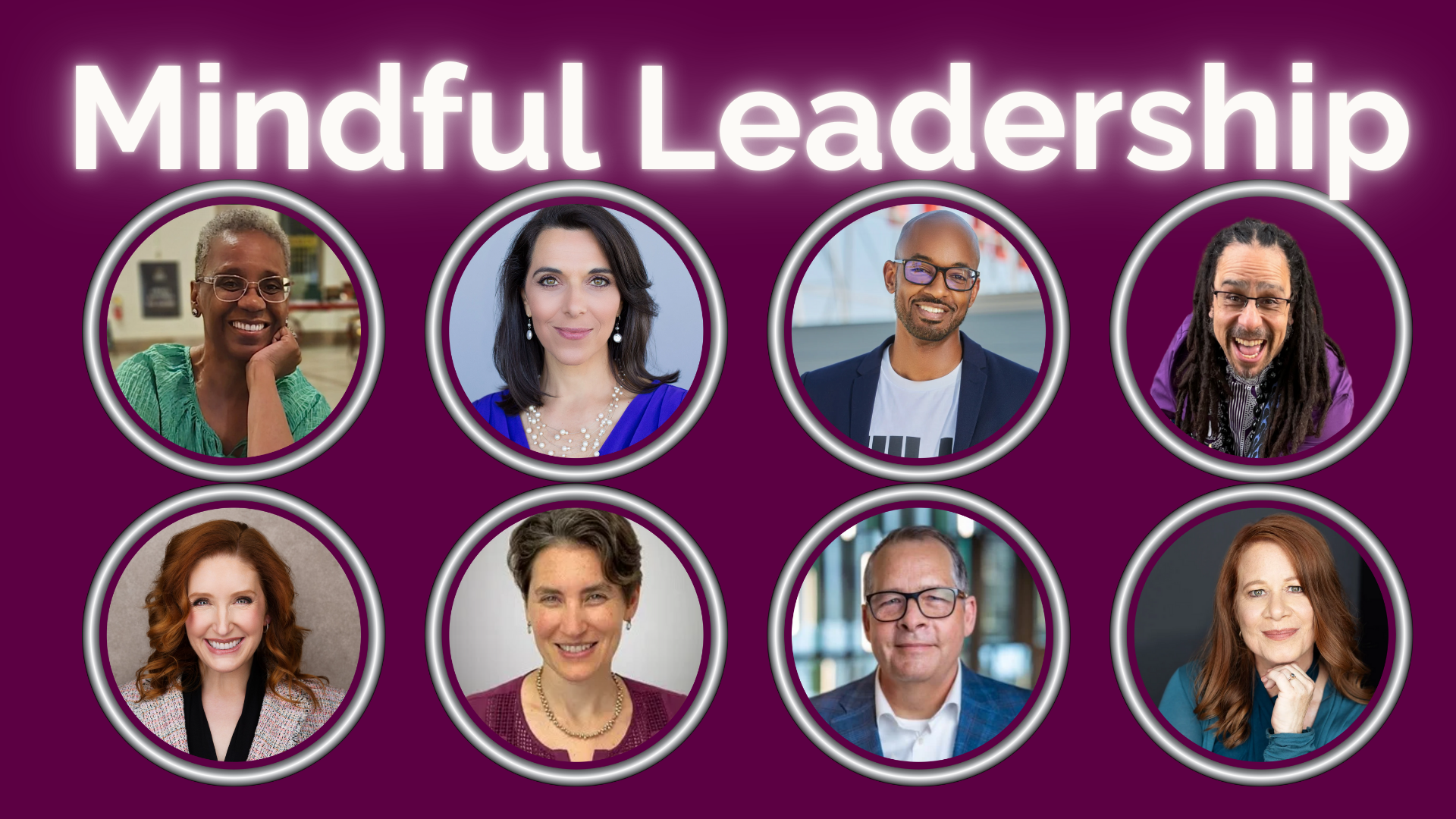
Presence is Priority One
One of the strongest threads running through this year’s conversations is the idea that trust is something we must embody before it becomes mutual.
As Diane Woodford reflected during our conversation, “love in action, a big part of that is just your presence.” It’s not about doing things in particular but rather being there and sharing space.
Many leaders still approach trust as an external outcome: something earned through performance or authority. But what emerged repeatedly in conversations is that trust begins internally with self-regulation and self-awareness. Only then can it begin to radiate outward.
People feel presence immediately — long before strategy, words, or titles come into play.
JGo Gordon echoed this idea from a more internal perspective when he emphasized the importance of “slowing down to really sit with your thoughts and to sit with what's going on inside your head that I think, is where the real learning happens.”
When leadership presence is missing, trust erodes.
Slowing Down Changes Everything
Another strong throughline across the year was a shared challenge to urgency.
Anna Liotta reminded us of the “very powerful practice of pause, notice, and choose” as a way to reset our nervous system and refocus on the things we can control.
Pat Copeland reflected on the importance of observation when he affirmed that “self reflection is a big part of managing your career.“
What emerged across these exchanges is not a call to disengage, but a reinforcement of the importance of pause. An understanding that speed without self-awareness undermines clarity, causing confusion. Space creates the conditions needed for better leadership.
Authenticity in Leadership
Several guests described pivotal moments when their concept of leadership shifted. Not because they necessarily learned something new, but because they stopped pretending to be something they weren’t.
Aaron Craig Mitchell spoke candidly about this when he suggested that “we don't always get to bring our whole selves to work, but we could at least bring as much as is appropriate for the environment.”
Tissa Richards reflected on this idea of authenticity and resilience when she said, “Every single person is already resilient. This is something we all have. If we're alive, we have it right? … You can be in this pressure cooker environment, which we're all in, I think you can turn pressure into power and have more energy” with more emotional resilience.
When leaders stop taking performative, inauthentic action and start being authentic, resilience and trust will begin to take root.
Holding Space Can Be Powerful
Perhaps the most profound theme of the year for me was the idea that leadership is not always about fixing things. And sometimes it’s not even about leading. In moments of cultural grief, societal transition, and deep social uncertainty, the discipline of staying present without rushing to identify solutions becomes more important than taking charge and leading the way.
Estate planner and award-winning attorney, Catherine Hammond, reinforced this idea that giving your family what they need most isn’t necessarily money or even fixing problems, but it’s about helping them thrive in the world. “There's a whole lot more that goes into giving ourselves and our loved ones what we really need to fully thrive and be all of who we can be and came to be in this world.”
Heather Shafter reflected on the courage required to find commonality with someone who holds a different viewpoint from our own. She said that, “when I am curious about where someone's coming from, and I ask questions and I seek to understand, what happens is the other person feels understood, and when we enable someone to feel understood, they want to understand us too.”
These reflections challenge a deeply ingrained leadership reflex to react and plow through without allowing our sense of curiosity and wonder to guide us.
Learning and Sharing Together
As I reflect on last year in my excitement for building on this strong foundation, I’m struck by how much we learned and shared together.
These conversations have reinforced my belief that the future of leadership will be defined by presence, trust, and humanity NOT by force or power. Mindful leadership is not about knowing exactly how to handle the challenges thrown at you, but about showing up for each one mindfully.
Thank you for being part of my journey. Thank you for listening, reflecting, and for doing the courageous work of building resilience.