
A City of Contrast, A City of Hope
Mumbai is a city of contrasts.
Sharp, shiny glass towers thrust boldly into the sky alongside squat corrugated-tin roofs. Luxury cars glide silently past auto-rickshaws and noisy, crowded local trains. Designer storefronts welcome wealthy shoppers, while just steps away, narrow lanes weave through dense clusters of humble homes where families cook, study, and work within space as large as a single room while cooking up dreams bigger than the whole wide world.
In Mumbai, everything exists together. All at once.
I’d visited the city many times, but this time I saw the contrast more closely than ever before.
Part of what really opened my eyes was taking a walking tour on one of my first days in the city with an insightful and inspirational guide named Rushita.
Circumstances Do Not Define Her
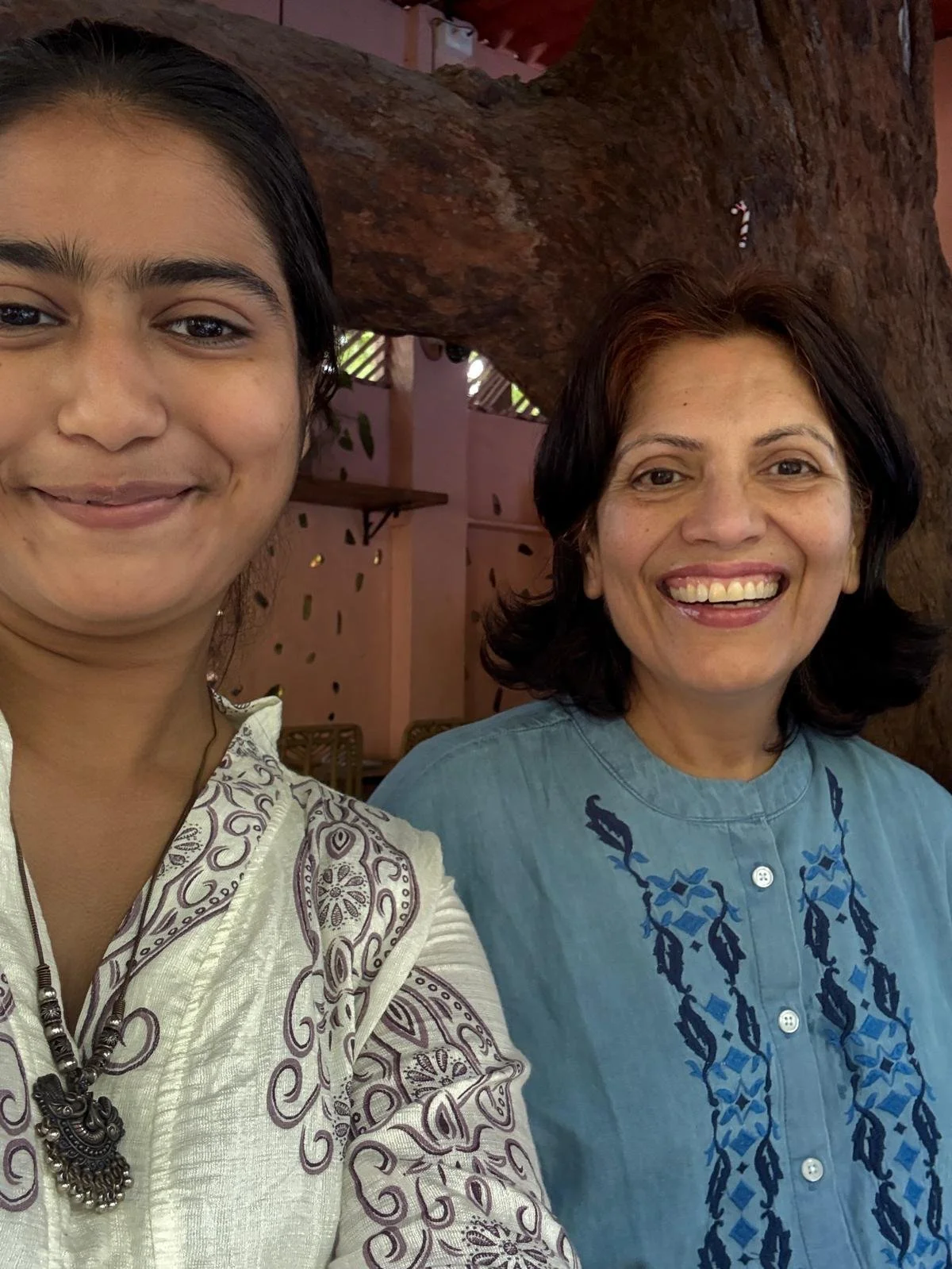
Rushita is twenty years old.
She and her family live in the slums of Bandra East. Their home is about fifteen feet by six feet, just under 100 total square feet. It shelters her father, mother, sister, and herself.
Her father has spent most of his life driving a rickshaw. At 60, his health is starting to fail, and the long days on the road are taking a toll on his body. Rushita helps support the family by leading walking tours and tutoring fellow students.
She is pursuing a Bachelor of Science degree. Her favorite subject is zoology. She loves animals and plants and speaks about them with the kind of enthusiasm that makes you want to listen.
As we explored the area, it quickly became clear that Rushita understood Mumbai in ways that many people who live comfortably in the city never could.
She knew its frenetic rhythm. Its hidden economies. Its sweetest treasures. Its resilient humanity. And that day, she shared her treasures with me.
Walking Through the City
From the main road, Rushita led me toward the sea.
It was the air that changed first. A faint smell of salt drifted in from the Arabian Sea, and the sound of traffic quieted behind us. We’d entered one of Bandra’s old fishing villages — a neighborhood that existed long before Mumbai became the restless metropolis it is today.
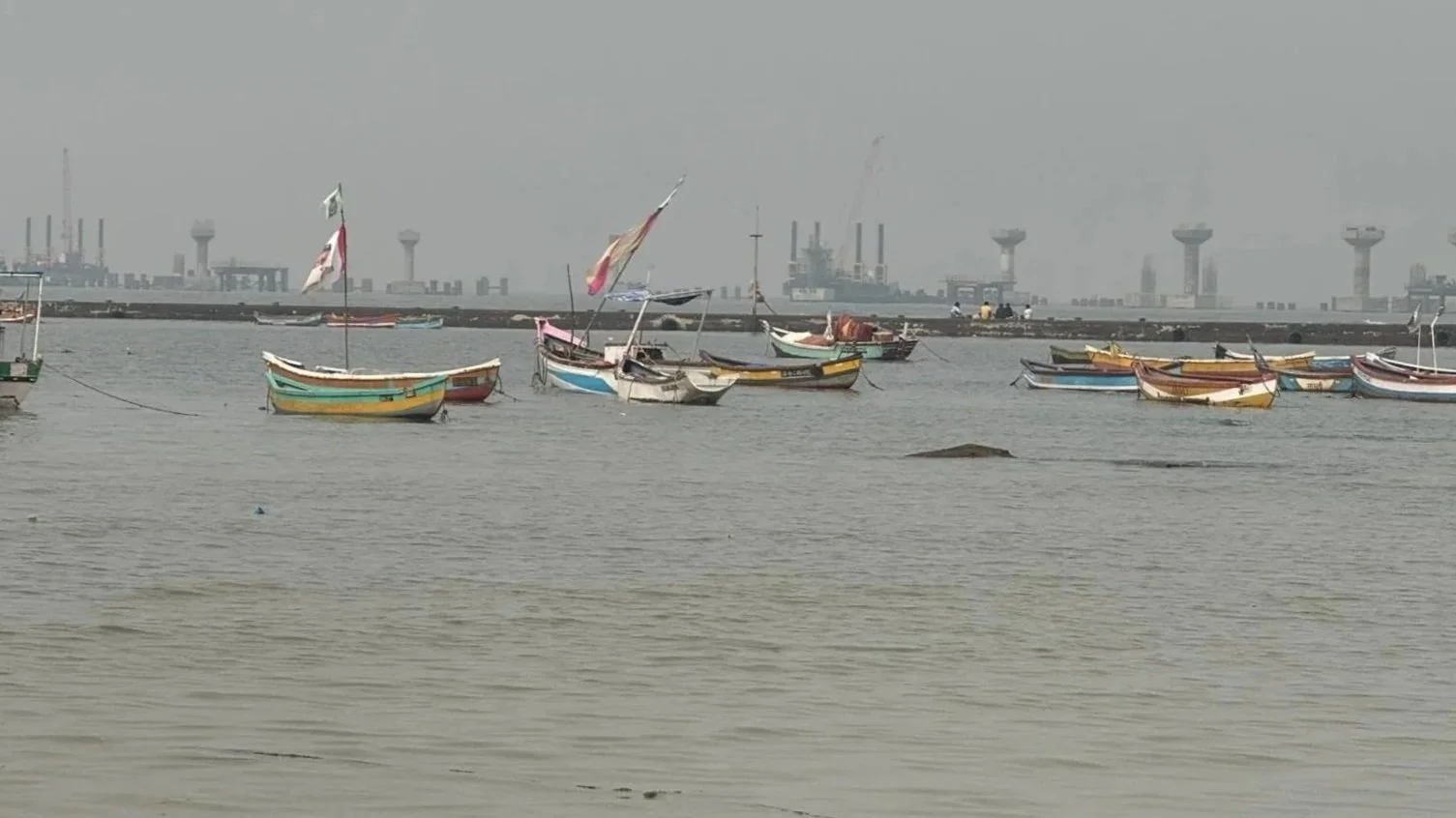
Determined dinghies clung to the rocky shoreline, their colorful paint faded by the unrelenting sun and the sea. Nets hung drying in the open air while fishermen moved their wares into the narrow, winding lanes behind them, where they would later become someone’s dinner.
From the fishing village, we moved into the older Catholic lanes of Bandra, and almost immediately, the pace of the city slowed.
Streets narrowed even further. Cheerfully painted homes abutted one another, their walls weathered by years of monsoon rain. Along the way, crosses and shrines to saints appeared at corners and in courtyards — unmistakable signs of a community with roots stretching back centuries to the Portuguese who arrived on this coast in the 1500s.
Then the road we were on began to climb.
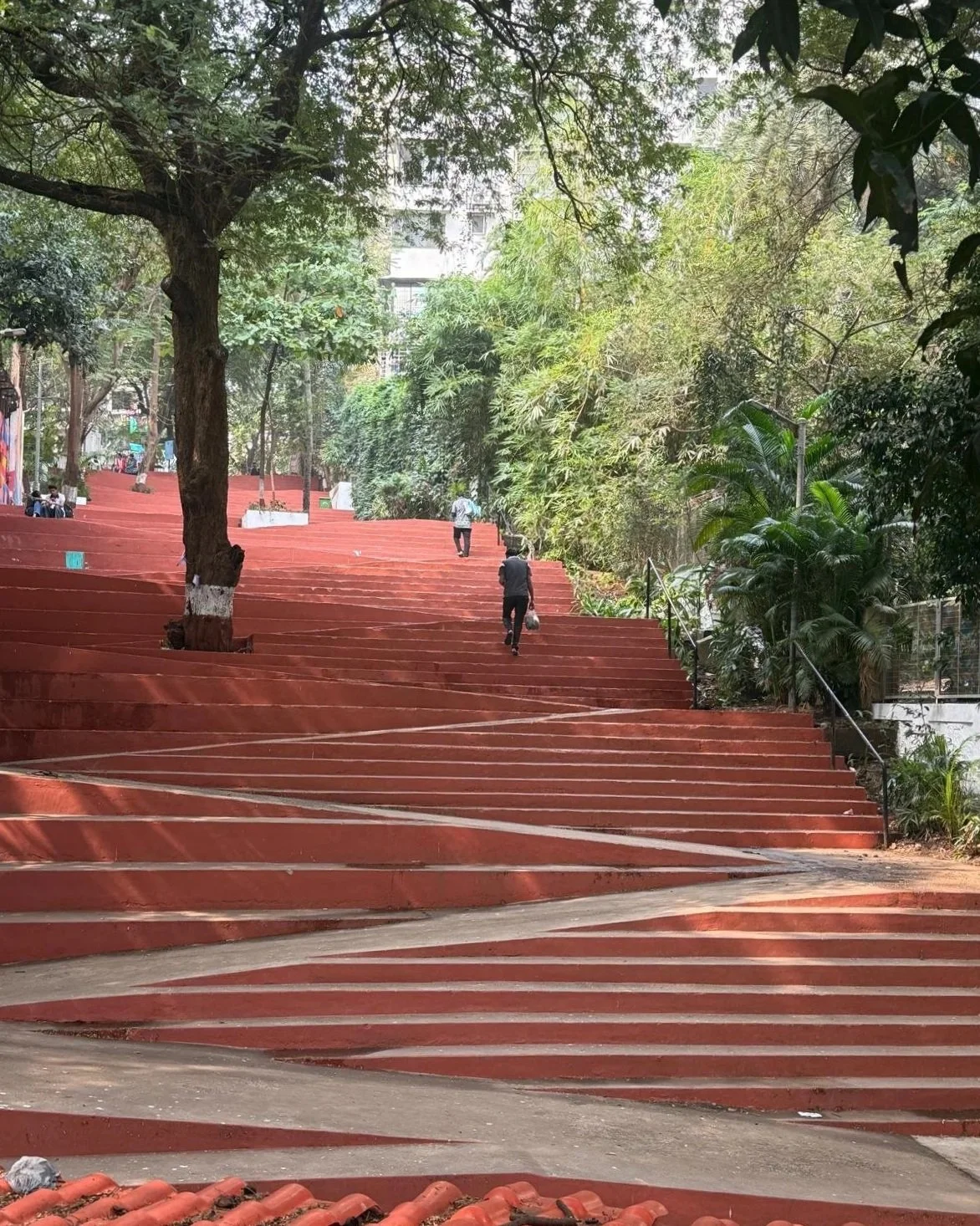
The path to Mount Mary ascended along a staircase, and with it the mood of the neighborhood shifted again. Brightly painted murals appeared one after another along the stairs — a rolling rickshaw, cups of steaming chai beside bold Bandra lettering, fragments of everyday life splashed into view.
The art felt playful, almost celebratory, layered onto what has long been a pilgrimage.
People have walked these steps for generations, making their way devotionally toward Mount Mary Church — each with their own burden to bear.
Step by step, the city fell away below us. And above us, at the top of the hill, the Basilica of Our Lady of the Mount, known simply as Mount Mary, stood gracefully above the neighborhood, looking out toward the Arabian Sea.
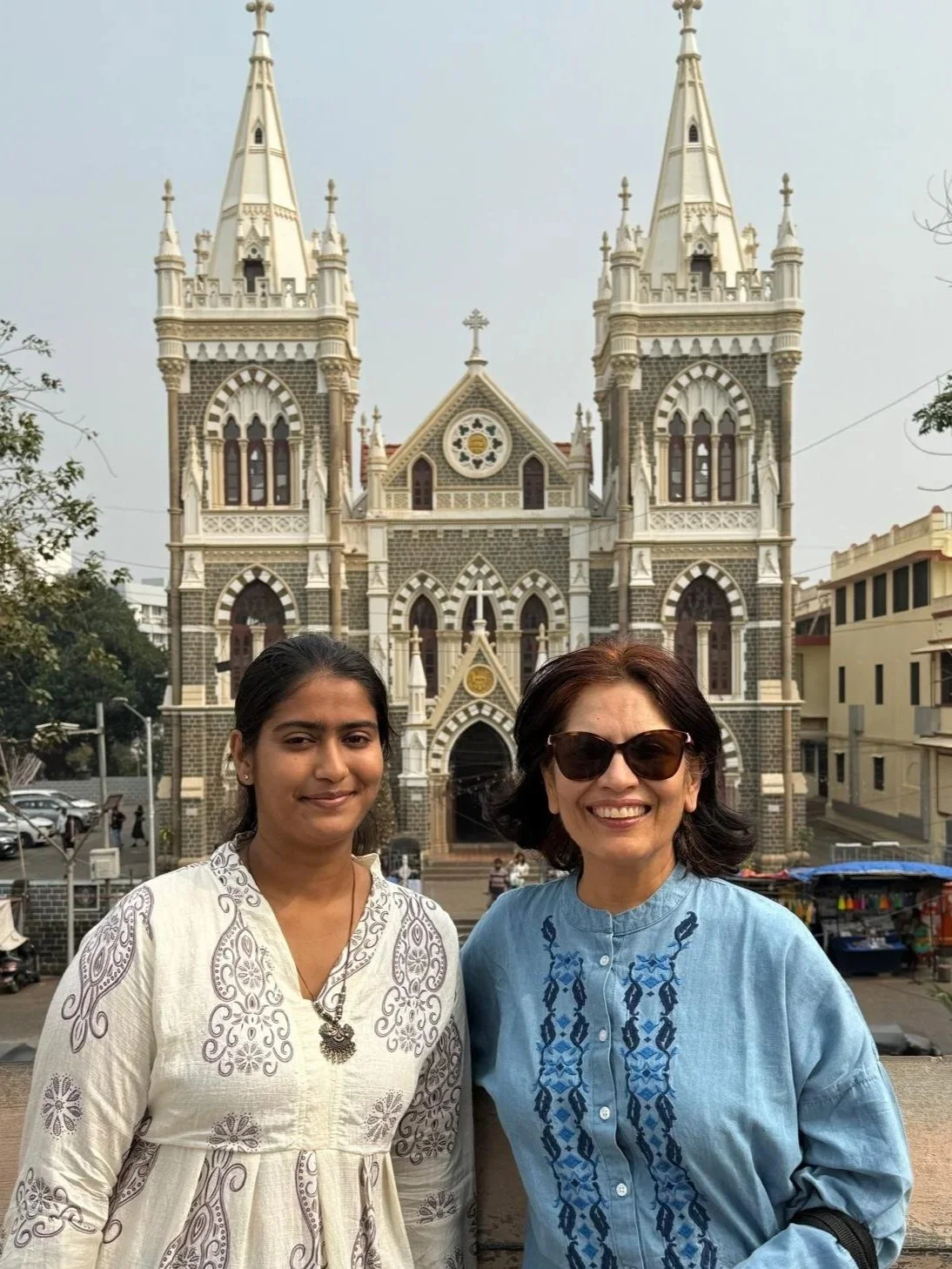
The church has watched over this neighborhood for centuries. The first chapel here dates back to the sixteenth century, and while the structure has been rebuilt and restored over time, the devotion has remained unwavering.
Outside the basilica, small stalls sold wax figures shaped like the things people pray for. A heart for healing. Eyes for restored sight. Tiny homes. Hands, feet, lungs, children, entire families. Each figure was a wish. A fervent plea.
I bought a wax figure representing the part of the body that had been troubling me. It felt oddly intimate to hold it in my hand, but somehow doing so filled me with hope that my body might find its way back to health.
Inside the church, Rushita stood beside me as I gently placed the wax offering and lit a candle. She closed her eyes and prayed with me.
Around us were strangers doing the same thing in their own way. Different languages. Different beliefs. Different troubles. Lives compressed into small spaces with big wishes.
A City of Extremes
Mumbai does not try to hide its contrasts.
There are no carefully drawn lines separating wealth from poverty, no buffers designed to soften the view. The city does not arrange itself politely.
Instead, everything exists side by side. To an outsider, it can feel overwhelming.
We are used to cities where life is carefully managed into building zones, where everything appears orderly and predictable.
Mumbai is none of that.
It is vast. Uncontained. Intensely alive.
The Capacity to Flourish
What has stayed with me most from that tour was not the contrast between slums and the skyscrapers. It was my guide.
It was Rushita.
Here was a young woman living in a tiny, shared space with her family, studying science, tutoring students, helping visitors experience another side of her city, while dreaming about a better future.
Rushita narrated her life in the city with pride. She explained how families support one another and how education can become a pathway forward. For her, the slums were not a place of limits. They were her foundation and a springboard toward a better life.
She was not waiting for perfect conditions. She was hope and conviction in motion.
She is making a life. She has aspirations, goals, and dreams.
And she is not alone. Across the city, millions of others are doing the same.
Rethinking Happiness
Many believe that achieving happiness requires the right conditions. But cities like Mumbai challenge that assumption. Life here is demanding.
Yet people laugh. They study. They work. Create art. They raise families. They imagine futures much larger than their current circumstances. The human capacity to adapt and flourish is extraordinary.
My tour with Rushita reminded me that we don’t need perfect conditions to begin building a life. In a city defined by contrast, she was not waiting for better circumstances to arrive. She was already moving toward her future.
As also seen on Substack at https://www.mindfulleaders.info/